
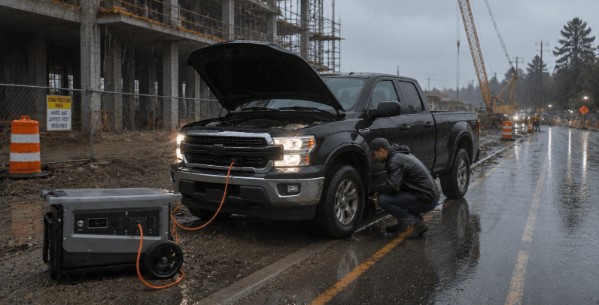

As you travel to a building site, you might come across one or two machines that produce electricity. Power problems cannot be scheduled and arise unexpectedly, especially if one of the managers is about to pour concrete. Attending the site at the moment of a rainstorm, one may find out that all the cables were submerged in water. A couple of workers working on the site were about to start using some of their tools when they found out that the wall plug was at least three hundred feet from them and had previously experienced a lot of other work before construction commenced. Construction workers are known to be the only people who can keep their hands relatively dirty without knowing when the job will be finished. It seems that Industrial power stations were made for sites which were dry, simple, and didn’t change much from time to time. However, nowadays, sites are more disordered, more flooded by rain, and more challenging than the technology which had been used to make equipment decades ago.
Why Traditional Power Setups Keep Failing Job Sites
People nowadays have gotten so used to using traditional generators that they never once stop to think if it is actually the best solution for them or not. All they have to do is ask several people in charge of smaller projects and they will understand that there are many reasons to be dissatisfied with them.
First and foremost, fuel has to be delivered from somewhere and stored somewhere, which creates some logistical issues and adds to the risks. The work being done close to residential areas always leads to a lot of noise complaints. Scheduled maintenance is rarely done as no one wants to wake up to refill the oil in the generator at 5 AM. In addition, in bad weather such devices often fail to operate properly.
What Makes These Units Different
Moreover, an industrial power station that is designed for construction sites should not be regarded as a large-sized version of portable batteries used for travelling. The industrial power station has such features as having high power output and being portable enough for being brought to the jobsite, as well as having good resistance. It can be used in the working environment, right next to the pile of rebar and will be left in the rain, turned over but easily placed on its feet and used for powering the machines the next day.
The power output is also crucial in this case. Only being able to operate a light bulb and charge the smartphone is good for the job, but does not mean that these machines can be used on construction sites actively. The devices that contractors choose are capable of powering devices such as saws, rebar cutters, compressors, welders, light towers, and air conditioning systems simultaneously as all these devices do not require power from fuel-powered generators.
In addition, many devices can be powered by utilizing solar energy, plugging them into an outlet, or charging them using the vehicle alternator; this provides construction site managers with better alternatives in terms of keeping their devices functioning throughout a multi-week project.
The Weather proofing Factor
This is the part that delivers a lot of the real value. A power source that cannot operate under an ordinary Tuesday of rain hardly qualifies as a proper power source. That is the reason the Waterproof Power Station category has become a central topic for the crews who work outdoors on a seasonal basis.
The watertight boxes, port covers, and shells with an IP rating allow machines to work in extreme rain without risk of short-circuiting or corrosion. The mere existence of this equipment would radically change many business processes as workers would not have to depend on generators anymore and cover them with canopies. Also, work in the area would go on even if the weather changes. Now, there will be no more excuses for postponing concrete pouring, roof construction, and completing facades until workers find a way to protect the equipment.
Additionally, there is also a safety aspect of this issue. The combination of water and electricity has made jobsites hazardous enough, but the presence of faulty covers and open wires creates additional dangers. A sealed unit that is well designed prevents the occurrences of electrical faults, shocks, and equipment failure that creates significant insurance and liability problems and makes life easier.
Where These Units Actually Get Used
Thinking about actual scenarios of how these energy plants operate is of utmost importance since it’s not easy to understand what advantages those plants present until you see them in action.
- Preparing a remote site: At the first stage of setting up a site with representatives of the utility company coming to that site, there will be only a small number of people (less than 10). In this case, an electric battery system will be one of the best options for ensuring power because it will not depend on the fuel-based system.
- Backup generator in case of malfunction: In case the generator stops working during its operating hours, the backup will save the day as the waiting for the repair truck will be avoided.
- Silence of generator: Projects located near the hospital, residential zone, or school have to comply with certain noise standards at specific times throughout the day.
- Lighting and Security at Night: To ensure that the security lighting system and communication devices work correctly during the night, there is a need for continuous electric supply, while this can be taken care of by the battery-powered unit that operates without noise in any conditions and without being forced to use the generator that produces noise and exhausts.
- Interior and Finishing Works: After the completion of the building, it is closed off, and one can work inside the building using the devices like grinders, vacuum cleaners, and light fixtures that operate with a small power station and without using extension cords that would have to go all over the place.
Cost and long-term Value
It must be pointed out that one must not be fooled. Let’s consider the initial price. The first price that you see is already higher than that of a basic gasoline-powered generator. Naturally, high-quality electric generators will be a bit pricier too. But when you consider the overall costs of operation, including fuel, maintenance costs, and downtime, which can add up to significant costs in the case of a conventional generator. You don’t need to change the engine oil, clean up spilled fuel, and you don’t lose money due to the idling because the team can work on another project. In addition to that, because there are fewer pieces of equipment, the chances of failure during the job in question are lower.
What to Look for Before Buying or Renting
There are some models that make promises such as being “industrial” or “weatherproof”, yet they may not perform well in the toughest job site conditions. Please take into consideration the following critical aspects to check prior to making a purchase:
- IP rating: Instead of reading something like “water-resistant”, you should search for a specific IP rating, which will provide you with the exact information on how dust and moisture levels may impact the operation of the device.
- Output power: Choose the unit wattage and surge rating that matches the operational tools rather than just opting for the light devices.
- Recharge options: Solar charging and quick charging using wall outlets would be beneficial in terms of flexibility while working on the site construction for many hours.
- Mobility: Moving heavy power supplies through the construction site becomes much easier if a power source has wheels, handles and does not weigh too much.
Final Thoughts
Job site equipment requirements include enduring physical impact, which can apply to the job site’s power pack as well. Construction teams may be racing tight deadlines, have to comply with noise restrictions, or accommodate changing weather conditions, that is exactly why contractors select tough weatherproof power systems. Reliable Industrial Generators are meant for harsh site applications and develop weatherproof features, which always mean adding new options. But having durable Waterproof Power Station in use means that an assured contractor will not be worried about being surprised by a power outage during pouring or experiencing any other unpleasant surprises.