

Foundation repair is not something most people plan for. In many cases, the conversation starts because a homeowner notices something that wasn’t there a year ago. A crack widens. A section of the floor feels slightly uneven. Perhaps a door that used to close easily now sticks every humid season. By the time a foundation inspection is scheduled, there is often as much uncertainty as concern.
One of the most common questions is simple: what actually happens if helical piers are recommended?
The answer depends on the property, but the process is usually more methodical than many homeowners expect.
The Investigation Comes Before the Repair
The visible symptoms are only part of the story. Before discussing solutions, a structural engineer or foundation specialist looks for evidence of movement and tries to understand why it is occurring. Measurements may be taken throughout the structure. Cracks are evaluated. Floor elevations can reveal subtle patterns that are difficult to notice during everyday life.
This stage matters because foundation settlement rarely occurs without a reason. Drainage issues, soil movement, moisture fluctuations, and changing ground conditions can all contribute. The repair plan should address the problem that caused the movement, not just the signs left behind.
Permits and Inspections
Foundation work in Cedar Rapids typically requires a permit, and an inspection is usually part of closing out the project. Most established contractors handle the permit application on the homeowner’s behalf and schedule the required inspection. It is worth confirming this during the initial consultation so there are no surprises at the end of the project.
Preparing the Foundation
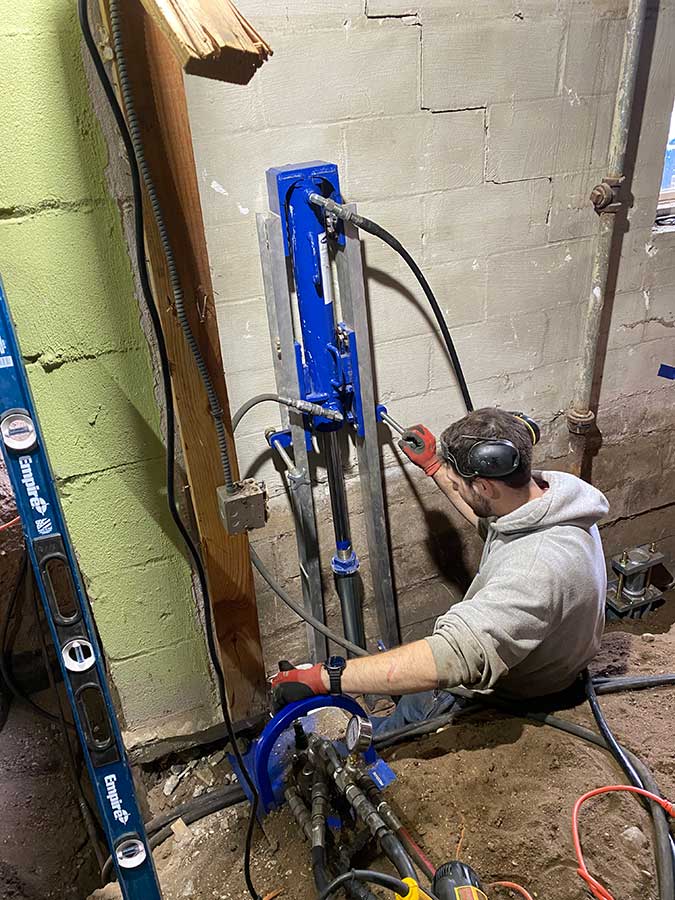
Once the areas requiring stabilization have been identified, access points are created near the affected portions of the foundation. Homeowners are sometimes surprised by how focused this work tends to be. Rather than excavating large sections of the property, crews usually work around specific locations where support is needed. The objective is to reach the foundation so installation can take place while minimizing disruption as much as possible.
At this point, the project starts to look less like a general construction job and more like a structural repair.
Installing the Helical Piers
The name comes from the steel plates attached to the shaft of the pier. As the system is advanced into the ground, those plates help the pier move through the soil until suitable bearing conditions are reached.
When discussing helical piers in Cedar Rapids, IA, homeowners are often surprised to learn that the support comes from deeper soil layers rather than the surface conditions that may be contributing to settlement.
Each pier is installed individually and connected to the foundation according to the repair design developed for the structure. The process is very different from simply patching cracks. The goal is to create support beneath the home, not merely improve appearances above it.
Most helical pier installations are completed within one to three days, depending on the number of piers required and site conditions. Homeowners can typically remain in the house throughout the work.
Stabilization, Lifting, and Evaluation
After installation, the foundation is carefully evaluated. At this stage, two outcomes are possible, and understanding the difference matters. Stabilization holds the foundation in its current position and prevents further movement. Lifting attempts to raise settled areas back toward their original elevation. Not every foundation is a candidate for lifting. Soil conditions, the degree of settlement, and the structure above all factor into what is realistic. The contractor or structural engineer will explain which outcome applies before work begins.
Projects involving helical piers in Cedar Rapids, IA, are often less about dramatic changes and more about stopping ongoing movement before additional damage develops.
For many homeowners, that peace of mind becomes one of the most valuable outcomes of the project.
What Happens After the Repair?
The repaired foundation should continue to be monitored. This is especially true if drainage problems, grading concerns, or moisture control issues were factors in the original settlement. A stable foundation performs best when surrounding conditions support that stability. Cosmetic repairs like filling cracks, re-hanging doors, or addressing interior finishes affected by movement typically follow once the structure is confirmed stable. These are separate from the structural work and should be factored into the overall budget.
Cedar Rapids, IA, homes that are still settling benefit from helical piers. This solution is able to transfer loads beyond unstable soils for permanent structural support. What homeowners notice most, however, is often much simpler. They see cracks stop growing, floors stop changing, and the house begins behaving the way it should.
That is ultimately the purpose of foundation stabilization. They do not make a repair look good but help the structure perform more consistently over time.